You just got engaged. The ring is on your finger, the texts are flying, and somewhere between the champagne toasts and the Instagram announcement, someone asks: "So, have you thought about flowers yet?"
If your immediate reaction is mild panic — welcome to the club. Wedding florals are one of the most exciting parts of planning, but they can also feel overwhelming if you don't know where to start. When do you actually reach out to a florist? What happens at a consultation? When do you need to have every last detail nailed down?
Here's the thing: there is a natural rhythm to the whole process, and once you understand it, everything gets a lot easier. This guide walks you through the complete wedding flower timeline, from the moment you say yes all the way to walking down the aisle with the bouquet of your dreams.
12+ Months Out: Start Dreaming (But Don't Wait Too Long)
The first thing most couples do is open Pinterest. That's a great start — building a visual reference for your floral style early on helps enormously when you eventually sit down with a florist. Are you drawn to lush, garden-style arrangements with ranunculus and garden roses? Clean and modern with sculptural greenery? Romantic and moody with deep burgundy and dusty mauve?
Save those images, create a mood board, and start noticing what you consistently return to. You'll refine it later, but having a visual anchor makes every conversation more productive.
This is also the right time to start researching wedding florists in your area. For couples planning weddings in the DMV — Washington DC, Maryland, and Northern Virginia — the florist market is competitive, and the best teams fill up fast, especially for peak season weekends.
Speaking of which: if your wedding falls between April and June (spring) or August through November (fall), you are planning during peak season. Florists with strong reputations book out months in advance for those dates. Don't assume you have time to spare.
9–12 Months Out: Book Your Florist
This is the single most important step in your entire wedding flower timeline, and it's the one couples most often do too late.
Nine months out is the sweet spot. A year out is even better if your wedding falls on a peak weekend. The florists worth working with — the ones whose portfolios make you stop scrolling — are not sitting around waiting for last-minute inquiries in March about an October wedding.
When you reach out, you're not committing to a specific design just yet. You're reserving your date and establishing a relationship. A good florist will want to know your vision, your venue, your approximate guest count, and your budget so they can tell you honestly whether they're the right fit.
At Blooming Blossoms, our minimum for wedding florals is $5,000, and our average full wedding package comes in around $5,200. We believe in being upfront about numbers because no one wants to fall in love with a florist and then discover the pricing doesn't work. Transparency matters — it's actually one of the reasons Christin started this business in the first place, after experiencing firsthand how difficult it was to find a responsive, budget-conscious florist while planning her own wedding.
When you're evaluating florists, look at their portfolio, read their reviews, and pay attention to how quickly and clearly they communicate. Your florist will be one of your closest vendor partners on the wedding day itself — responsiveness matters.
6–9 Months Out: Your Vision Consultation
Once you've booked your florist, the real fun begins.
Most florists — including our team — schedule a detailed design consultation a few months after booking and several months before the wedding. This is where your mood board gets turned into an actual floral plan. Expect to discuss:
Your ceremony and reception setup — how many tables, what style (rounds, farm tables, mix?), what the ceremony backdrop or arch looks like
Your personal flowers — bridal bouquet, bridesmaids' bouquets, boutonnieres, flower girl petals
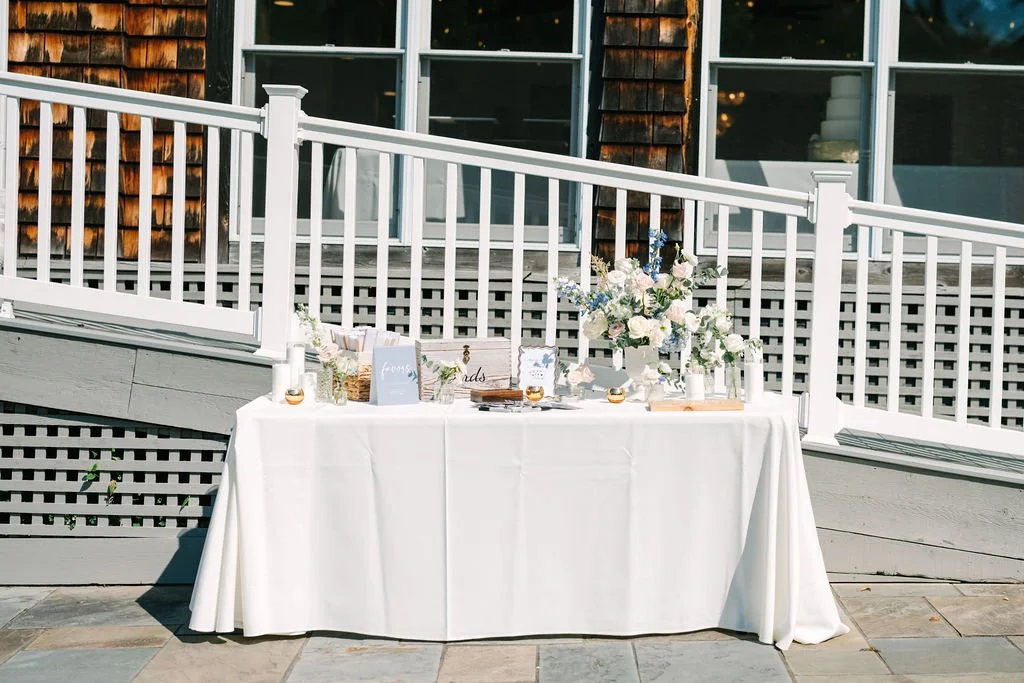
Accent pieces — welcome arrangements, escort card tables, cocktail hour florals, cake flowers
Color and texture — your specific palette, the flowers that carry the aesthetic, and the greenery or textural elements that tie it all together
This is also when a realistic picture of your investment takes shape. If the initial quote comes in higher than expected, a good florist won't just shrug. They'll work with you — swapping certain flowers for seasonal alternatives, adjusting scale, or identifying where a little goes a long way visually.
For couples getting married at venues like George Peabody Library, Gramercy Mansion, The Belvedere, Herrington on the Bay, or Hotel Monaco in DC, the scale and architecture of the space plays a huge role in how florals are designed. Tall, dramatic ceilings call for different arrangements than intimate garden ceremonies. A florist who has worked in those spaces already knows what works — and that experience is worth a lot.
3–4 Months Out: Lock In the Details
Your proposal should be finalized well before the three-month mark. This is the time to:
Confirm your final guest count and table layout
Approve the flower varieties and color palette
Review the full itemized quote and sign off
Discuss logistics — arrival time, setup window, point of contact on the day
Changes after this point can still happen, but the further you get from the wedding, the harder it is to accommodate significant additions. Flowers are ordered from wholesalers and growers on a specific schedule. If you decide three weeks out that you need eight more centerpieces, your florist may not be able to source the exact blooms in your palette.
This is also a good time to share any vendor contacts your florist will need — your venue coordinator, your planner, your day-of contact. A well-organized florist will want to coordinate load-in timing with the venue directly. The smoother that logistics conversation goes, the more seamless your wedding morning will be.
4–8 Weeks Out: Final Check-In
As the wedding gets closer, your florist will schedule a final check-in — sometimes in person, sometimes a quick call — to review every item on the order.
Come to this conversation with your confirmed headcount, any last-minute ceremony or reception changes, and any questions about the day-of timeline. This is your opportunity to flag anything that has shifted since your design consultation.
It's also the moment to confirm delivery details: What time does your florist arrive at the venue? Where do the personal flowers go — hotel room, bridal suite, or directly to the venue? Who on your team should they contact when they arrive?
At Blooming Blossoms, we handle our own setup and cleanup for all flower events, including weddings. That means one fewer thing for the couple and their families to manage on the day itself.
1–2 Weeks Out: You're Almost There
You do not need to do much here on the floral front — and that's by design. If you've followed this wedding flower timeline and communicated clearly with your florist along the way, everything is already in motion.
The flowers have been ordered. The design has been confirmed. The logistics are locked. Your only job now is to trust the process and focus on getting yourself to the altar.
One practical note: make sure your bridal party knows where and when to pick up their personal flowers if they're not being hand-delivered. Confirm the location one more time so there are no day-of surprises.
Week of the Wedding: Let It Happen
Wedding day is not the time to manage your florist. A good florist arrives when they say they will, sets up without supervision, and leaves your venue transformed before your guests walk in.
For full-service weddings across the DMV, our team arrives with everything staged and ready — bouquets, boutonnieres, ceremony flowers, reception arrangements, and everything in between — so you can focus entirely on the moment.
When you finally walk into your ceremony space and see your vision brought to life with fresh blooms, you'll realize that all the planning was absolutely worth it.
Ready to Start Your Wedding Flower Journey?
The best time to book your wedding florist was yesterday. The second-best time is today.
If you're planning a wedding in the DC, Maryland, or Northern Virginia area and you want a florist who will be honest with you about budget, genuinely collaborative about design, and completely reliable on the day itself — we'd love to be part of your celebration.
We can't wait to hear your story — and help you build the florals that tell it.
Blooming Blossoms is a full-service wedding and event florist serving the greater DMV Metro area, including Washington DC, Maryland, and Northern Virginia. Our studio is located in Silver Spring, Maryland. Couples usually invest around $5,000.